Welcome to the online event on Ways to Support Your Child’s Relationship with Food and Their Body! Join our registered dietitians for an informative session where we will discuss how diet culture affects how we think and talk about bodies, how children learn about food, and how the words we use to talk about food and bodies can impact children. You will learn practical tips and strategies to help your child develop a healthy relationship with food and their body. Our expert speakers will share valuable insights and answer any questions you may have. Don’t miss this opportunity to learn how you can support your child’s well-being. Register now to secure your spot!
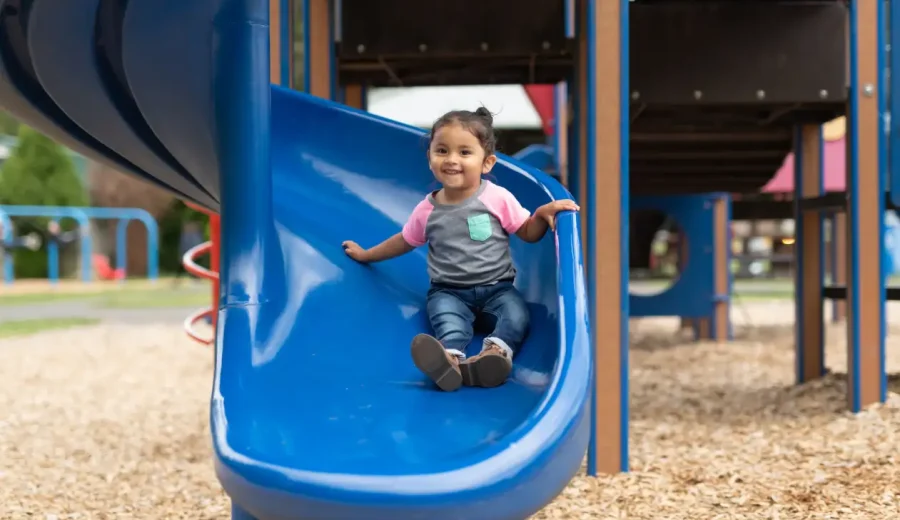
Like a moth to a flame, my two-year-old likes to take risks. She climbs onto our dining room table, jumps from the ottoman to the couch, and spins in circles until she falls down. My toddler brings this same enthusiasm for risk in her outdoor play as well. You might think that I have a particularly adventurous two-year-old, or that toddlers take risks because they don’t know any better. Perhaps there’s a kernel of truth to those assumptions, at least the first, but the reality is that almost all toddlers are drawn to risky types of play. While there has been a lot of research about the importance of risky play for preschoolers and kids, risky play is important for toddlers too! In fact, toddlers experience risky play in a very similar way to older kids. In this article I’m going to review the basics of risky play: what it is, what it isn’t, and the benefits of risky play for toddlers. Then I’ll provide a fun list of toddler appropriate risky play activities for your toddler to try at home and outdoors.
Toddlers go through many changes in just a couple of years. They always seem to be running, jumping and climbing. Your toddler is a bundle of energy and emotion. They’re starting to question everything around them. On this page, you’ll learn the developmental tasks and milestones that your toddler is working on as they move through the ‘doing’ and ‘thinking’ stages.
It’s that time of year again – as kids get ready to hit the books, moms and dads face not only a new routine but a growing list of things to do. For families, it can get overwhelming. From packing lunches to buying school supplies, it’s hard to know where to start. Check out the following resources for tips on how to prepare your kids for the first day of class.
The Canadian Paediatric Society has released a new recommendation regarding the importance of risky play in a child’s development—and the statement may surprise parents and caregivers. The recommendation says that unstructured play, particularly outdoor risky play, has a crucial role in the physical, mental, and social development of children. How do you define risky play? Risky play is defined by “thrilling and exciting forms of free play that involve uncertainty of outcome and a possibility of physical injury.” It’s important to note that the report also states that injuries sustained during risky play are usually minor soft-tissue injuries, such as abrasions, contusions, and lacerations. This suggests that the benefits of risky play seem to outweigh the potential negative outcomes. In fact, according to the Canadian Paediatric Society, “Paediatricians are encouraged to think of outdoor risky play as one way to help prevent and manage common health problems such as obesity, anxiety, and behavioural issues.” As parents, we all want to keep our children protected and safe. However, because the trend over the last several decades has seen more and more children spending time indoors and on screens, the new recommendation is that children should be encouraged to engage in outdoor play and only kept “as safe as necessary and not as safe as possible.” That might mean simply staying alert while watching your kids engage in potentially dangerous activities, but avoiding the impulse to interfere. This type of general approach is described as “vigilant care” or the “lifeguard” approach to parenting.